.png?width=1800&height=528&name=Elite%20Floor%20Coatings%20Header%20Logo%20With%20White%20Background%20(1).png "Logo for Elite Floor Coatings in Chambersburg, Pennsylvania.")
.jpg)

Are you looking for an affordable way to refinish your ugly concrete floors? If you’ve done other research then you may have seen that polishing it or grinding and sealing it could be your best options. Choosing between polished concrete and grind and seal depends on your budget, aesthetic goals, and functional requirements. Both processes transform plain concrete into attractive, durable floors, but they differ significantly in approach and results. Understanding these differences helps you select the right finish for your space.
Understanding Polished Concrete
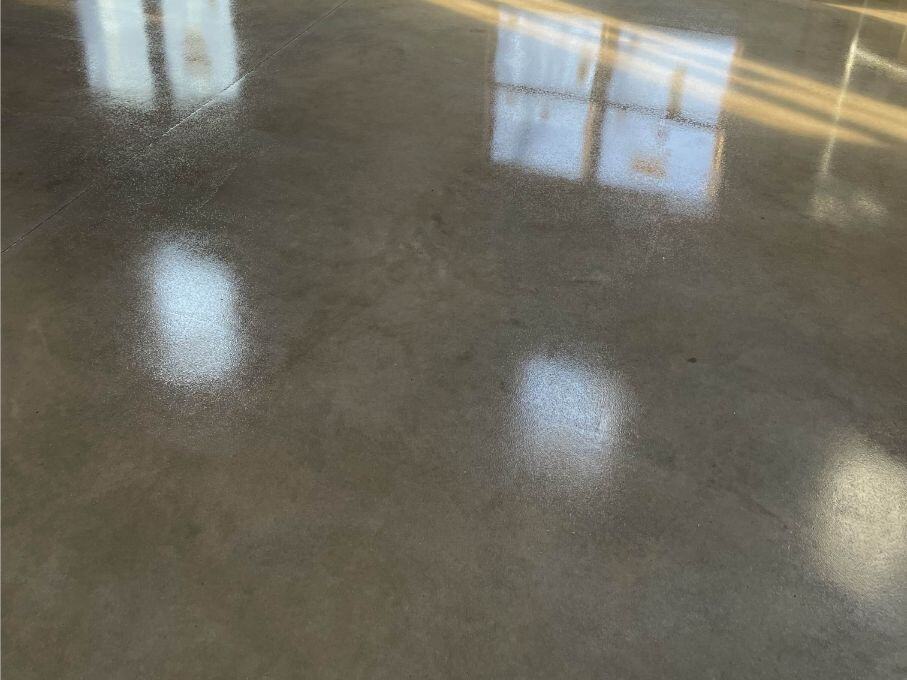
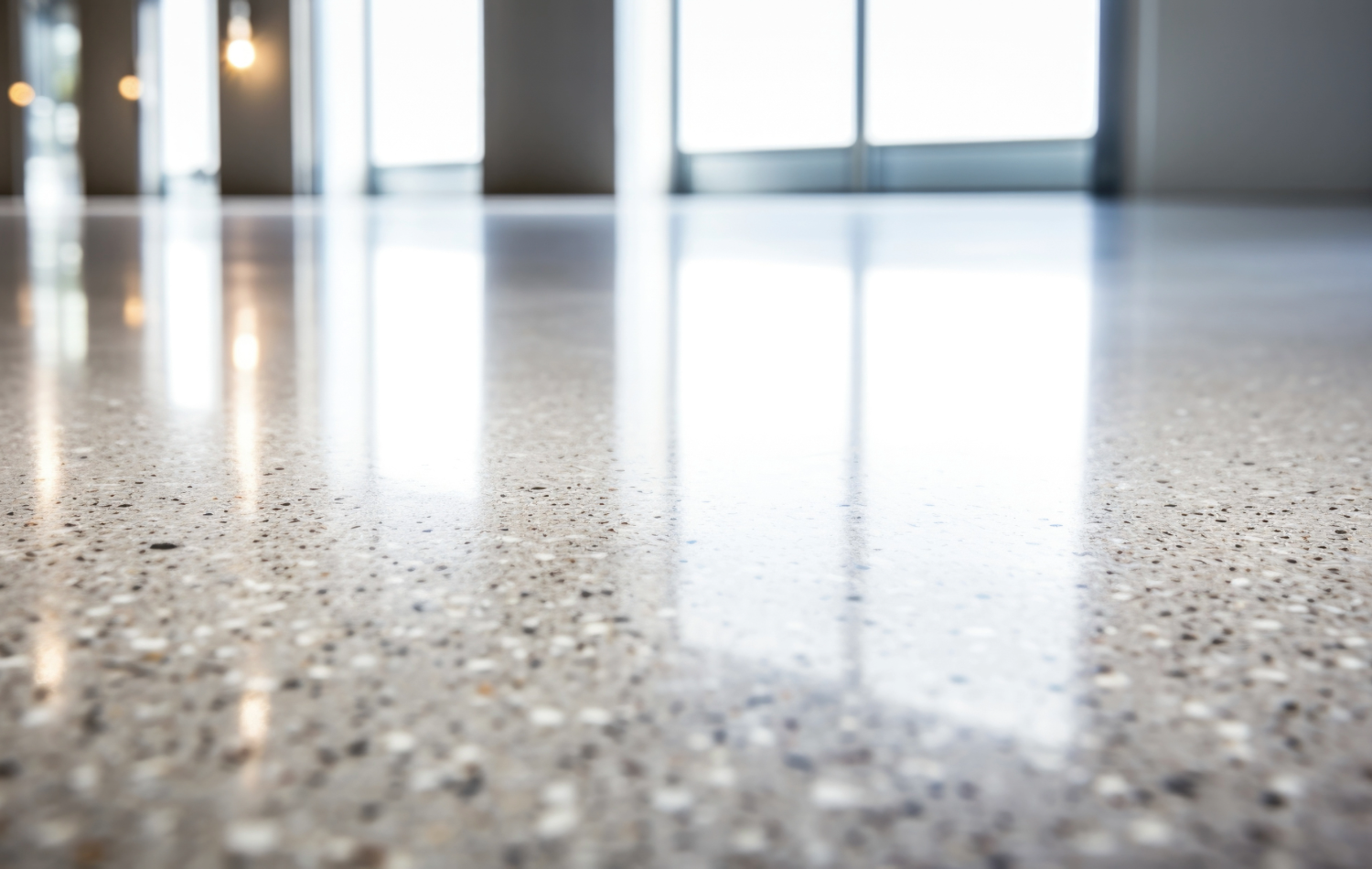
Polished concrete is a multi-step mechanical process that refines the concrete surface to a smooth, glossy finish. The process uses progressively finer diamond abrasives to grind and polish the concrete. The result is a durable, reflective surface that showcases the natural beauty of concrete and exposed aggregate.
Concrete Polishing Process
There is a science or you might say art to polishing concrete, and there are several steps to get from bare concrete to a glossy, reflective finish.
Grinding Phase
The polishing process begins with coarse diamond grinding to remove surface imperfections and coatings. This initial grinding levels uneven areas and opens the concrete pores. The depth of grinding determines how much aggregate becomes visible in the final finish.
Multiple grinding passes using progressively finer grits prepare the surface. Each pass removes scratches from the previous grit level. This creates an increasingly smooth foundation for the polishing phases.
Honing Phase
Honing uses finer diamond abrasives to refine the concrete surface. This intermediate step bridges the gap between rough grinding and final polishing. The honing process begins to develop sheen and clarity in the concrete.
Multiple honing passes with increasing grit levels smooth the surface further. The concrete begins to take on a satin appearance during this phase. Proper honing is essential for achieving a high-quality polished finish.
Polishing Phase
The final polishing phase uses very fine diamond abrasives to create shine and reflectivity. Multiple polishing passes with progressively finer grits develop the desired gloss level. The concrete surface becomes increasingly reflective with each polishing step.
Understanding Polishing Grit Resins
Diamond abrasives are categorized by grit level, measured in numbers. Lower numbers (30-50 grit) indicate coarse diamonds for heavy grinding. Higher numbers (400-3000 grit) represent fine diamonds for polishing and creating gloss.
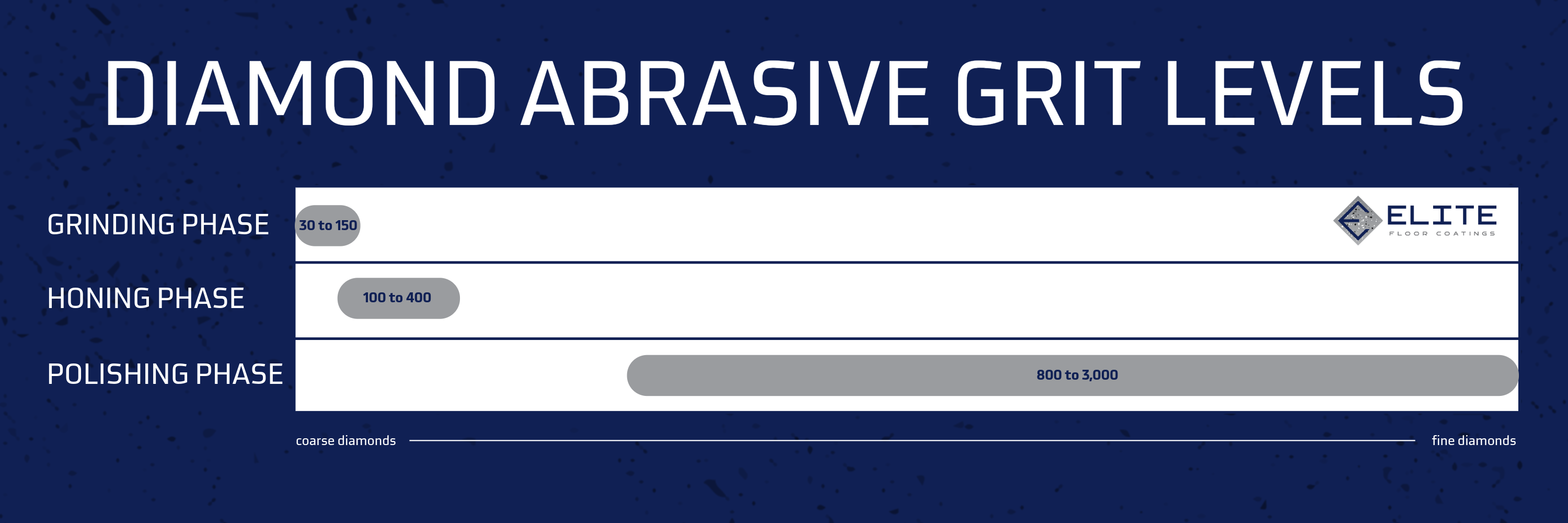
The grit progression typically moves through distinct ranges. Grinding uses 30 to 150 grit for surface preparation and leveling. Honing employs 100 to 400 grit to refine the surface and begin developing sheen.
Polishing utilizes 800 to 3000 grit for final finishing. Each grit level removes scratches from the previous step while adding clarity. The final grit level determines the ultimate gloss and reflectivity of the floor.
Different gloss levels require stopping at specific grit ranges. A matte finish might stop at 400 grit, while a high-gloss finish continues to 1500 or 3000 grit. More polishing steps mean more labor and higher costs.
Cost of Polished Concrete
The cost depends greatly on how glossy or reflective you want your concrete to be. The intensity of initial grinding also impacts price, as exposing more aggregate requires additional work. If you are looking for a more matte concrete look, then the cost would be less than a glossy reflective polished finish.
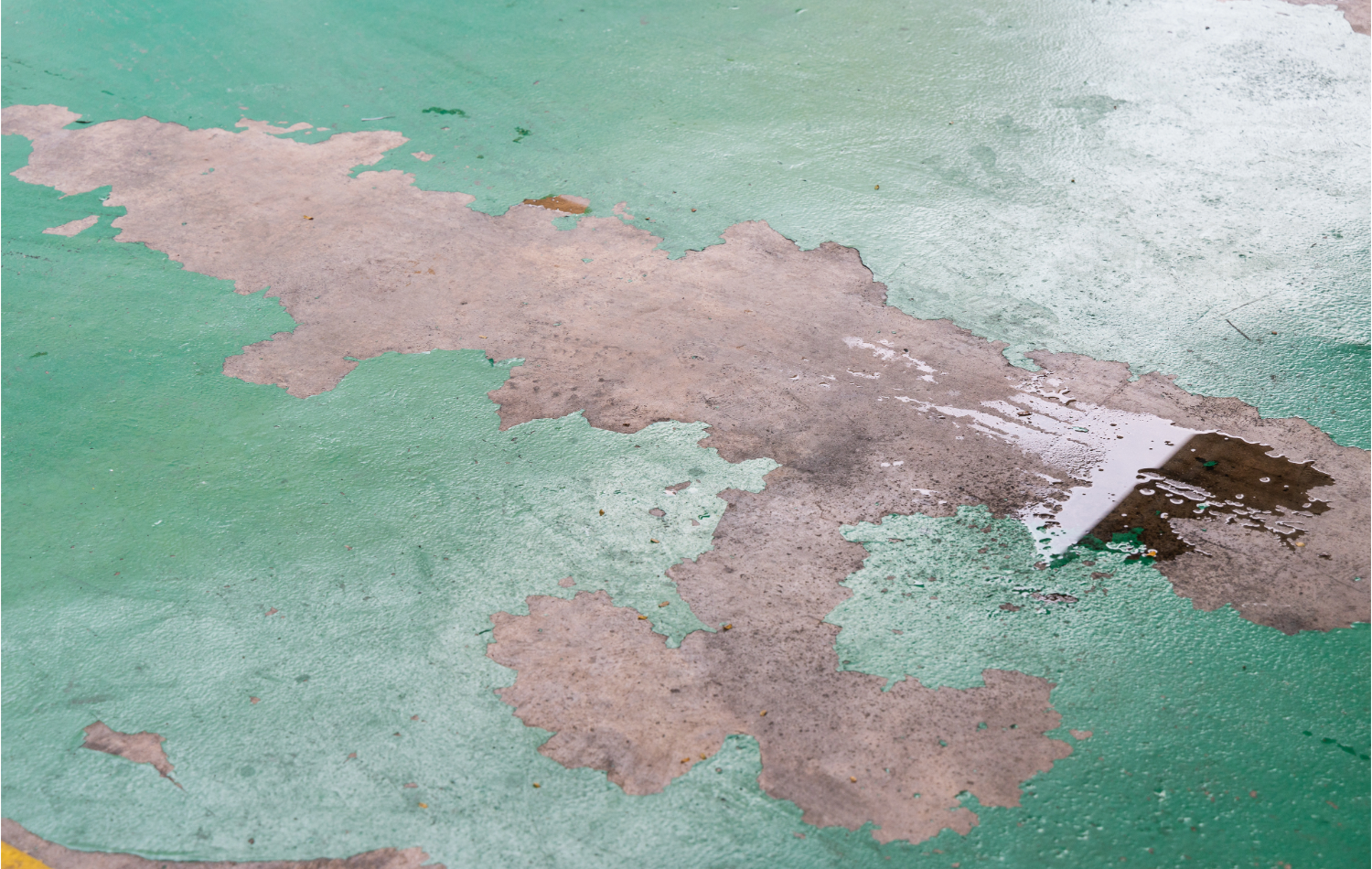
The current condition of your concrete also impacts the cost significantly. Heavily damaged concrete that needs more repairs requires additional time and materials, increasing the investment. Concrete in excellent condition requires less preparation work and costs less than damaged surfaces.
Polished concrete typically ranges between $6 and $12 per square foot. The specific price within this range depends on the desired finish level and condition of the existing concrete.
Why Choose Polished Concrete
Polished concrete offers numerous advantages especially for commercial and industrial uses due to the durability of polished concrete. The combination of durability, aesthetics, and low maintenance makes it attractive for many commercial settings.
Key Benefits:
- Extremely durable surface that lasts for decades with minimal maintenance
- High reflectivity improves lighting efficiency by reflecting ambient light
- No coatings or sealers required, eliminating the need for reapplication
- Environmentally friendly option that utilizes existing concrete slab
- Resistant to moisture, stains, and tire marks in garage and warehouse settings
- Low maintenance requiring only dust mopping and occasional damp mopping
- Improves with age as foot traffic naturally polishes the surface
Polished concrete is most commonly found in airports, showrooms, car dealerships, retail spaces, and other industrial spaces where a glossy, reflective finish might be important.
Downsides of Polished Concrete
While polished concrete offers many benefits, it has limitations to consider. Understanding these drawbacks helps set realistic expectations for the finished floor.
Key Drawbacks:
- Higher upfront cost compared to grind and seal or other basic concrete finishes
- Would not hold up as well against corrosive material or spills compared to grind and seal
- Longer installation process requiring operational downtime in most commercial settings
- Slippery when wet unless treated with slip-resistant additives
Understanding Grind & Seal
Grind and seal is a more straightforward concrete finishing process with the grinding machine stopping just short of polishing the concrete.This approach delivers a clean, functional floor at a lower cost than polished concrete. This is the choice for many commercial uses where they want to protect and upgrade their old concrete without the need for the higher-end finish that polishing provides.
Grind and Seal Process
The grind and seal process is very similar to that of polishing except we do not continue to polish the concrete with finer grit abrasives to create a reflective finish. We grind down the top layer of concrete to remove imperfections and then clean the concrete with a shotblast machine. The concrete is then coated with a sealer versus continuing to polish.
Surface Grinding
The process begins with diamond grinding to remove the top layer of concrete. This eliminates surface stains, minor damage, and existing coatings. The grinding exposes fresh, clean concrete underneath.
.jpg?width=800&height=599&name=1500%20Pound%20Grinder%20Machine%20(Somerset).jpg)
Unlike polished concrete, grind and seal typically uses fewer grinding steps. The goal is creating a smooth, level surface rather than a polished finish. Grinding usually stops at 100 to 200 grit, which is much coarser than polished concrete.
Crack and Repair Work
Any cracks or damage are repaired after grinding. Epoxy or polyurea crack fillers bond to the prepared concrete. These repairs prevent cracks from telegraphing through the sealer.
Joint filling may be necessary for control joints and expansion joints. Proper repair work ensures the sealer performs as intended. This step is critical for long-term durability.
Sealer Application
A protective sealer is applied to the ground concrete surface. Water-based urethane sealers are most common for grind and seal applications. The sealer penetrates slightly and forms a protective film on the surface.
Multiple coats of sealer provide adequate protection. Each coat enhances durability and appearance. The sealer protects the concrete from stains, moisture, and light abrasion.
Cost of Grind & Seal
Grind and seal is one of the most cost-effective options for finishing concrete floors. The streamlined process requires fewer steps and less specialized equipment than polished concrete. This efficiency translates to lower labor and material costs.
The cost for grind and seal services ranges between $2 and $6 per square foot. The specific price depends on the concrete condition and the quality of sealer used. This makes grind and seal significantly more affordable than polished concrete.
Why Choose Grind and Seal
Grind and seal offers practical benefits for budget-conscious projects where functionality trumps aesthetic (not that grind and seal isn’t attractive). The system delivers good performance at a fraction of polished concrete costs.
Key Benefits:
- Most affordable concrete finishing option for clean, functional floors
- Faster installation process minimizes downtime compared to polishing
- Improves appearance by removing stains and surface imperfections
- Sealer protects concrete from moisture, light stains, and dust
- Works well over concrete in various conditions, including slightly damaged surfaces
- Easy to maintain with regular sweeping and occasional mopping
- Can be refinished by adding new sealer coats as needed
Many large square footage spaces choose grind and seal simply because of economics and its attractiveness compared to old, damaged concrete. If you are looking for a concrete coating option for a warehouse, factory, restaurant, public restroom, or other space with ugly concrete, then a grind and seal treatment could be your best option.
Downsides of Grind and Seal
Grind and seal has limitations compared to more permanent solutions. The sealer-based approach requires ongoing maintenance to preserve protection.
Key Drawbacks:
- Sealer could require reapplication every depending on wear, but is rarely needed
- Less durable than polished concrete under heavy traffic or abuse
- Appearance is more utilitarian than the glossy finish of polished concrete
- Sealer can wear unevenly in high-traffic paths, creating visible patterns
- Could show scratches more easily than polished concrete
Consult Concrete Coating Professionals
At Elite Floor Coatings, we evaluate your current concrete condition and discuss your goals for functionality and aesthetics. Our experienced team makes appropriate recommendations based on your budget, timeline, and performance requirements.
We have finished or refinished over 1,000 commercial concrete floors, and have experience with a variety of coating options based on your needs. Every concrete floor is unique, and the right finishing approach depends on multiple factors. We consider traffic levels, moisture conditions, existing damage, and your long-term maintenance preferences. This comprehensive evaluation ensures you invest in the solution that best meets your needs.
Contact Elite Floor Coatings today and let’s say NO to ugly concrete!