
Looking for a waterproof flooring option for your home or business? There are several waterproof flooring options available, including luxury vinyl plank (LVP), sheet vinyl, tile, and professionally finished concrete.
Many of these popular flooring materials can withstand surface spills, but water that gets underneath the material, through seams, or into grout lines can cause problems. Understanding which types of floors are actually waterproof and which are best for your use case is important.
Let's look at the most common waterproof flooring options, where each works best, and what you should consider before choosing one.
1. Luxury Vinyl Plank (LVP)
Luxury vinyl plank is one of the most popular flooring choices for homeowners looking for a waterproof or water-resistant alternative to traditional hardwood. LVP is made from synthetic materials and designed to resemble natural wood, stone, or other flooring styles.
Individual planks typically have waterproof cores, making them resistant to damage from everyday spills and moisture.
Where LVP Works Best
LVP is a versatile option for many residential and commercial spaces, including:
- Kitchens and dining areas
- Bathrooms and laundry rooms
- Living rooms and bedrooms
- Retail stores and office spaces
Its appearance, comfort underfoot, and relatively simple installation make it appealing for many applications.
Is LVP Completely Waterproof?
Although the individual planks are generally waterproof if you get a decent quality plank, the entire floor is not necessarily waterproof. Most LVP installations have seams between individual planks. If water sits on the floor or enters through these seams, it can reach the subfloor underneath.
Trapped moisture can contribute to mold growth, unpleasant odors, and damage to the subfloor. Depending on the installation and the materials underneath, repairs may require removing sections of the flooring.
LVP is a good choice for areas with occasional spills and moisture, but it is not the best option when you need a completely moisture-proof floor.
2. Sheet Vinyl Flooring
Sheet vinyl is another affordable flooring option made from synthetic materials. Unlike LVP, which comes in individual planks, sheet vinyl is manufactured in large rolls and installed in continuous sections.
Because it has fewer seams, sheet vinyl offers better protection against surface water entering the subfloor than many other vinyl flooring options.
Where Sheet Vinyl Works Best
Sheet vinyl is commonly installed in:
- Bathrooms
- Kitchens
- Laundry rooms
- Utility rooms
- Healthcare facilities
- Other spaces where easy cleaning is important
It is also relatively inexpensive and comes in a wide variety of colors, patterns, and styles.
Is Sheet Vinyl Completely Waterproof?
Sheet vinyl is highly water-resistant, but installation quality plays a major role in how well it protects against moisture. Seams, edges, transitions, and areas around fixtures can allow water underneath the material.
Once moisture gets trapped below the vinyl, it can damage the subfloor and create conditions for mold and mildew.
Sheet vinyl is a practical choice for areas with regular spills and cleaning, but it still relies on proper installation and sealed edges to keep water out.
3. Ceramic and Porcelain Tile
Tile is one of the most durable and water-resistant traditional flooring options. Ceramic and porcelain tiles are made from materials that resist moisture, making them popular choices for bathrooms, kitchens, entryways, and commercial spaces.
Porcelain tile is especially dense and has a very low water absorption rate, making it an excellent choice for areas with frequent water exposure.
Where Tile Works Best
Tile is commonly used in:
- Bathrooms and showers
- Kitchens
- Entryways and mudrooms
- Restaurants and commercial kitchens
- Retail and commercial bathrooms
- Pool areas and other wet environments
Tile is also available in countless styles, colors, sizes, and textures.
Is Tile Completely Waterproof?
While the tile itself is highly water-resistant, the grout between tiles is not naturally waterproof. Grout is porous and can absorb water, liquids, and other contaminants.
Over time, moisture can penetrate grout lines and reach the materials underneath. This can contribute to staining, deterioration, and mold or mildew growth, especially in areas that remain damp.
Grout also requires regular cleaning and occasional sealing to help maintain its resistance to moisture.
Tile can be an excellent option for wet areas, particularly when installed with proper waterproofing underneath. However, the tile and grout alone do not create a completely waterproof surface.
4. Epoxy Coated Concrete
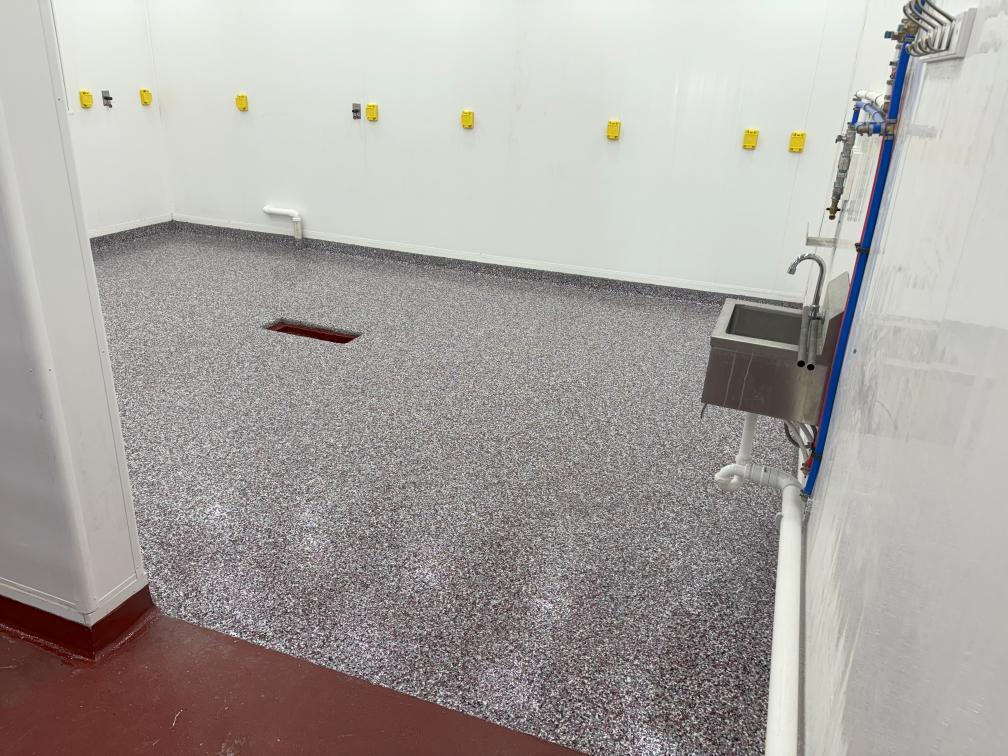
Epoxy flooring is one of the best options for creating a true waterproof floor. The coating is applied directly to the concrete, creating a continuous, seamless barrier that helps prevent water and other liquids from penetrating the floor.
Epoxy also offers decorative options, including solid colors and speckled paint chip finishes. These finishes allow you to improve the appearance of concrete while adding a protective surface.
Where Epoxy Flooring Works Best:
- Residential garages
- Basements
- Workshops
- Public Restrooms
- Commercial kitchens
- Warehouses and manufacturing facilities
- Retail and service businesses
When properly installed, epoxy coatings provide excellent protection against water and many other liquids. Because the coating is bonded directly to the concrete, there are no individual planks, sheets, or grout lines where water can seep underneath.
Proper concrete preparation and installation are essential. Cracks, improperly sealed edges, and coating failures can create opportunities for moisture intrusion. Excessive moisture vapor coming through the concrete can also cause adhesion problems if it is not addressed before installation.
When water is going to be a problem, we install a cove base between the floor and the wall. This means we extend the epoxy coating 4 to 6 inches up the wall to create a waterproof seal between the floor and wall. The seamless transition eliminates the vulnerable joint where water typically penetrates. This also makes mopping and cleaning up liquids much easier.
Waterproof Epoxy Floors from Elite Floor Coatings
If you have a garage, basement, commercial property, or other concrete surface that needs better protection against water or chemicals, Elite Floor Coatings can help.
We specialize in professionally installed concrete coatings that improve the appearance of your floors while providing a durable, easy-to-clean surface. Our epoxy finishes combine an epoxy base coat with a polyaspartic topcoat to create an attractive, protective finish.